
Top AI Tools for Academic Research 2026
In 2026, the academic landscape has shifted from manual data gathering to AI-assisted discovery. Students no longer spend weeks sifting through physical archives; instead, they leverage the top AI tools for academic research to streamline their entire workflow. These platforms act as a digital bridge between raw information and structured academic insights, allowing you to focus on critical thinking.
Whether you are an undergraduate or a PhD candidate, finding the best AI tools for research literature review is the difference between a mediocre paper and a high-distinction submission. By utilizing natural language processing and semantic search, modern AI can analyze millions of papers in seconds, ensuring your bibliographic database is both deep and accurate.
Why Students Need the Top AI Tools for Academic Research 2026
Traditional search engines often fail to grasp the contextual relevance of a query. Students today face “information overload,” where thousands of search results make it impossible to identify the core research gap. AI tools solve this by providing synthesized summaries and mapping out citation networks.
Comparison of Top AI Tools for Academic Research (2026 Updated)
Traditional search engines often fail to grasp the contextual relevance of a query. Students today face “information overload,” where thousands of search results make it impossible to identify the core research gap. AI tools solve this by providing synthesized summaries and mapping out citation networks.
Comparison of Top AI Tools for Academic Research (2026 Updated)
| Tool | Strength | Best Use Case | Free Version |
| Semantic Scholar | Citation Graph Mapping | Finding high-impact papers | Yes (Free Forever) |
| Perplexity AI | Conversational Discovery | Quick fact-checking & sourcing | Yes (Basic Unlimited) |
| Elicit | Literature Synthesis | Systematic reviews & data extraction | Yes (Free Credits) |
Semantic Scholar: An AI-Powered Research Assistant for Students
Semantic Scholar is widely recognized as the top AI tool for academic research when you need to navigate the vast landscape of scientific literature. Developed by the Allen Institute for AI, it uses machine learning to help students move beyond simple keyword matching and understand the true impact of a research paper through semantic search technology.
Key Features
-
TLDR Summaries: AI-generated, one-sentence summaries of 60M+ papers that capture the main objective and results instantly for rapid screening.
-
Highly Influential Citations: A specialized algorithm that identifies citations where the paper had a significant impact on the citing study, helping you find foundational research.
-
Personalized Research Feeds: An AI recommender that learns your interests from your saved papers and alerts you to new, relevant studies in your bibliographic database.
-
Semantic Reader: An augmented PDF reader that highlights key terms and shows citation cards without leaving the page, improving information architecture.
The Golden Prompt for Semantic Scholar
Since Semantic Scholar is a search engine rather than a chatbot, your prompt is your Search Query. For 2026, use Semantic Keywords instead of simple words to get the most relevant results:
The Golden Discovery Query: ” [Core Topic] [Specific Methodology] [Year Range] [Influential] “
Example: “Machine learning in sustainable urban planning Highly Influential 2024-2026”
Semantic Scholar: Official Link for Semantic Scholar
Pricing
-
Free: $0 (All core AI features, including TLDRs and Research Feeds, are free forever).
Pros & Cons Table
Pros Cons 100% Free academic engine No built-in AI writing or “Chat” assistant Best-in-class citation mapping Limited database for non-English sources Influential Citations save hours TLDRs aren’t available for 100% of papers yet
Best For
-
Literature Mapping: Finding the “parents” and “descendants” of a research idea.
-
High-Volume Research: When you need to screen 50+ papers quickly using TLDR summaries.
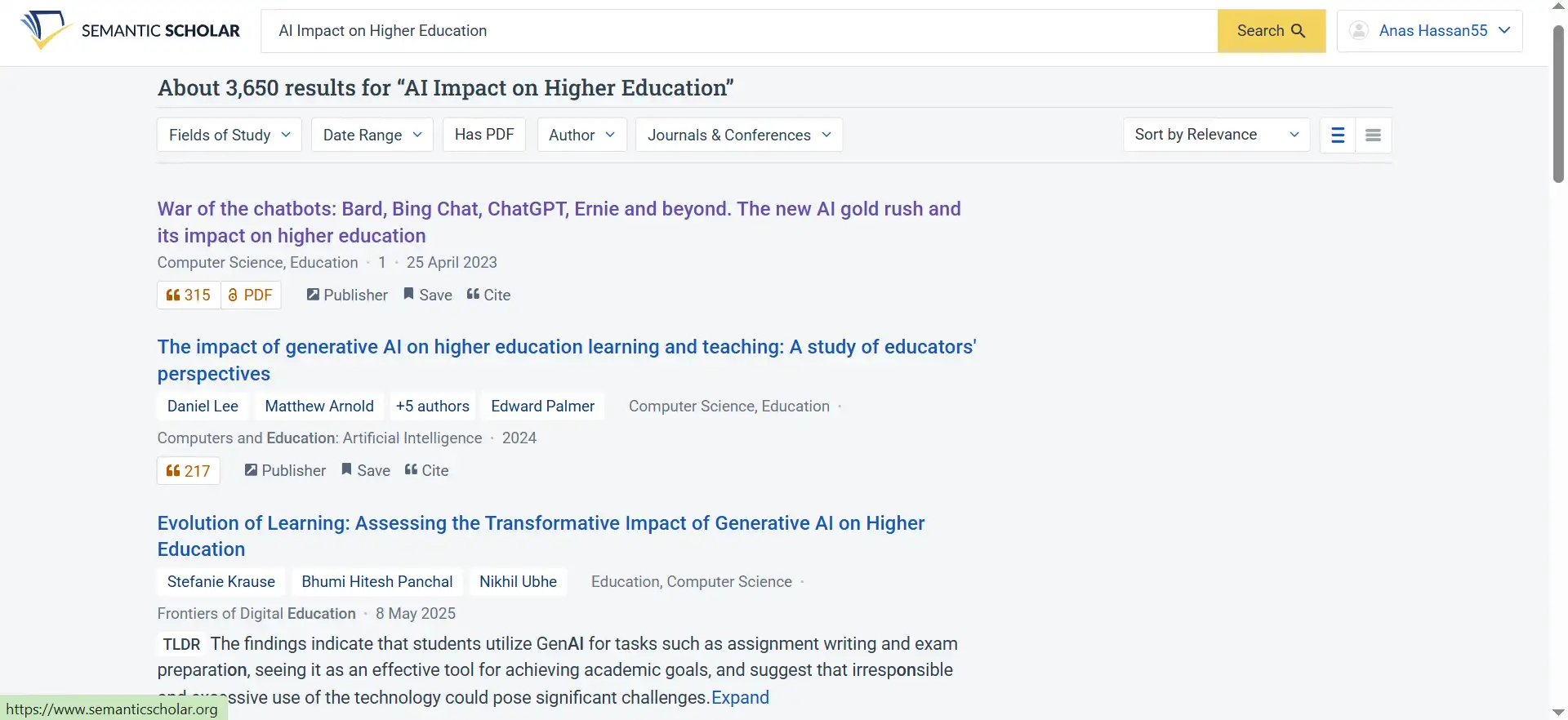
Semantic Scholar: Why It’s Better Than Google Scholar
“Forget Google Scholar’s messy lists. Semantic Scholar is for students who want the ‘cheat code’ to research.
The Real Value:
-
Instant TL;DR: In my screenshot, you can see how it summarizes a 30-page paper into one sentence. That’s hours of reading saved.
-
3,650 Results: Searching for ‘AI Impact’ gave me thousands of verified papers—no blog posts, no ads.
-
Influence Signal: It literally tells you which paper is a ‘Masterpiece’ (Highly Influential), so you only cite the best.
Perplexity AI: The Top AI Tool for Academic Research Discovery
Perplexity AI is the top AI tool for academic research when you need immediate answers backed by real-time web data. It functions like a search engine you can talk to, providing a bridge between broad curiosity and specific scholarly sources. It uses natural language processing to understand complex student queries and provide cited evidence.
Key Features
Pro Search: A multi-step reasoning engine that asks clarifying questions to narrow down your research intent.
Academic Focus Mode: A specialized toggle that restricts searches to scholarly databases and peer-reviewed journals.
Source Citation Mapping: Every claim made by the AI is numbered and linked directly to the original source for verification.
File Analysis: Allows students to upload lab notes or research PDFs to extract specific data points or summaries.
The Golden Prompt for Perplexity AI
To get academic-grade results instead of generic web summaries, use this persona-based prompt in your search bar:
The Scholar Prompt: “Act as an Academic Research Assistant. Using only peer-reviewed sources from the last 5 years, explain the current consensus on [Topic]. Highlight any major research gaps and provide a list of the 5 most cited authors in this field.”
Official Link for Perplexity AI
Official Link for Perplexity AI
Pricing
Free: $0 (Unlimited basic searches and 5 Pro searches every 4 hours).
Pro: $20/month (Unlimited Pro searches, file uploads, and access to GPT-4o/Claude 3).
Education Pro: $4.99/month (Special discounted rate for verified students).
Pros & Cons Table
Pros Cons Lightning fast discovery and summaries Free version has a daily limit on deep research Transparent sources for every claim Can cite blogs if not switched to Academic Mode Best mobile app for researching on the go No built-in reference manager integration Best For
Initial Discovery: Getting an overview of a new topic with instant citations and verified links.
Fact-Checking: Verifying specific claims during the writing process to maintain academic integrity.
Pro Tip: Finding high-quality papers is only half the battle. To ensure your bibliography is perfectly formatted in APA, MLA, or Harvard style, check out my guide on the best AI citation generator to save hours on manual formatting.
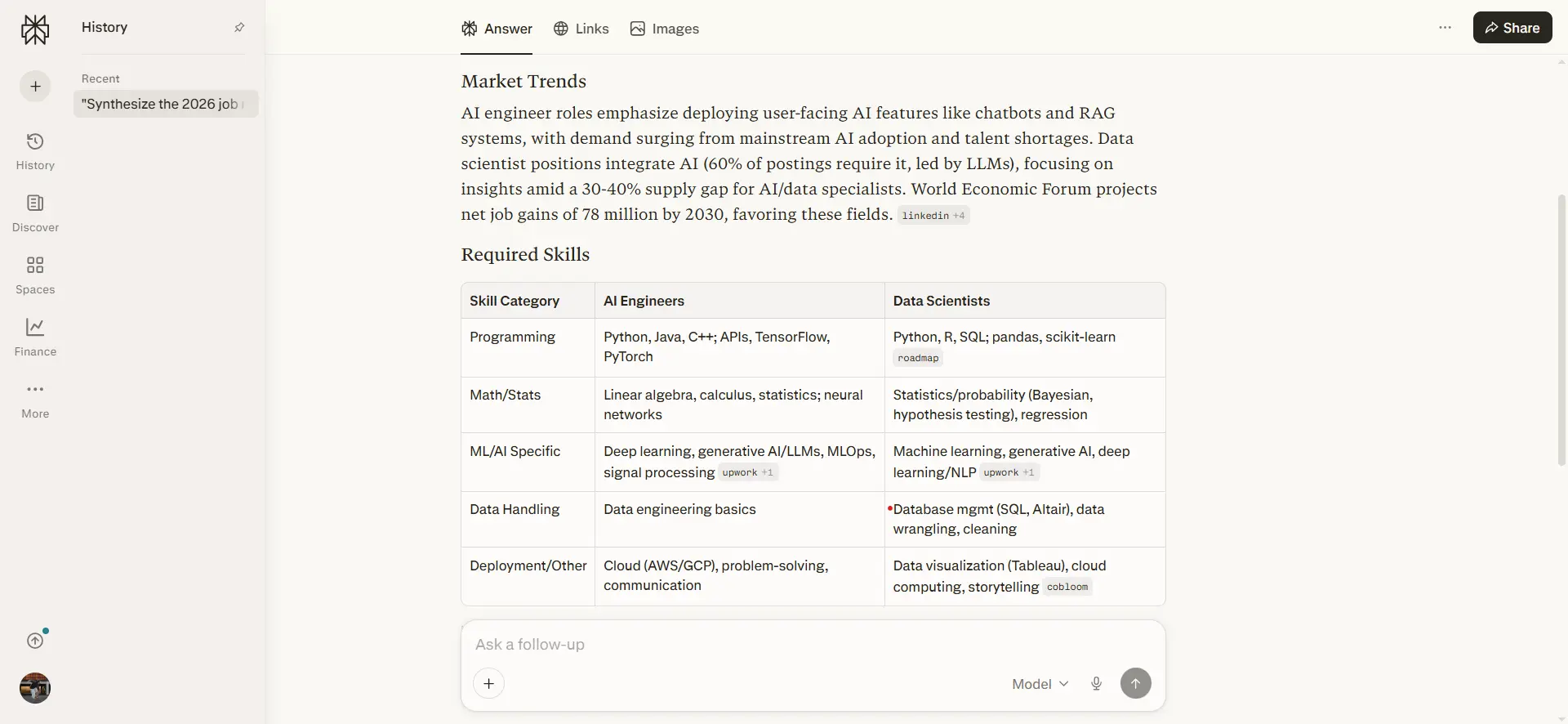
My Honest Take
“I’ll be real: Since I started using Perplexity, my Google usage has dropped by 50%. If you’re a student, this is the ‘Search Engine’ you actually deserved.
Why I actually like it:
No More ‘Trust Me Bro’: The best thing you can see in my screenshot is the footnotes. It doesn’t just give you an answer; it gives you the link to the original PDF or article. If the AI is wrong, you’ll know instantly.
The ‘Academic’ Filter: This is a hidden gem. I switched the ‘Focus’ to Academic, and it completely ignored trashy blogs and only showed me peer-reviewed papers. For a university assignment, that’s a massive win.
Pro Discovery: I love how it suggests ‘Related Questions’ at the bottom. Often, the AI knows what I should be asking better than I do.
The Reality Check: It’s not perfect. Sometimes it can get overwhelmed with too many sources and give a dry, robotic summary. But as one of the top ai tools for academic research, it is unbeatable for finding facts quickly. My advice? Use it to find the ‘What’ and ‘Why,’ but use your own brain to write the final paper.”
Elicit: The Best AI Tool for Research Literature Review and Synthesis
Elicit is widely considered the best AI tool for research literature review because it automates the most tedious part of academia: data extraction and synthesis. It uses language models to analyze papers and create a structured overview of the current research landscape.
Key Features
Evidence Tables: Automatically pulls data like sample size, methodology, and main findings into a comprehensive spreadsheet.
Synthesis Summaries: Summarizes the top 8-10 papers on a topic to show the overall trend in research.
Sentence-Level Verification: Highlights the exact sentence in the research paper where the AI found its information.
Custom Columns: Allows you to define specific data points you want the AI to find across multiple PDF documents.
The Golden Prompt for Elicit
Elicit works best with specific, measurable questions. Use this structured prompt format for the best results:
The Synthesis Prompt:
“What are the effects of [Variable A] on [Variable B] in [Specific Population]? Please extract the methodology and key numerical results for the 10 most relevant papers.”
Official Link for Elicit
Pricing
-
Basic: Free (Starts with 5,000 one-time credits for new users).
-
Plus: $10/month (Includes 12,000 monthly credits and high-speed data extraction).
-
Enterprise: Custom pricing for large research institutions.
Pros & Cons Table
| Pros | Cons |
| Automates tables that usually take days to create | Credit-based system can be confusing for students |
| Extreme accuracy with cited evidence from papers | Not meant for creative writing or brainstorming |
| Deep analysis of full-text PDF content | Better suited for STEM than Humanities |
Best For
-
Systematic Reviews: Creating evidence tables for long-form research papers and theses.
-
Data Extraction: When you need to compare specific numbers and methodologies across many studies.
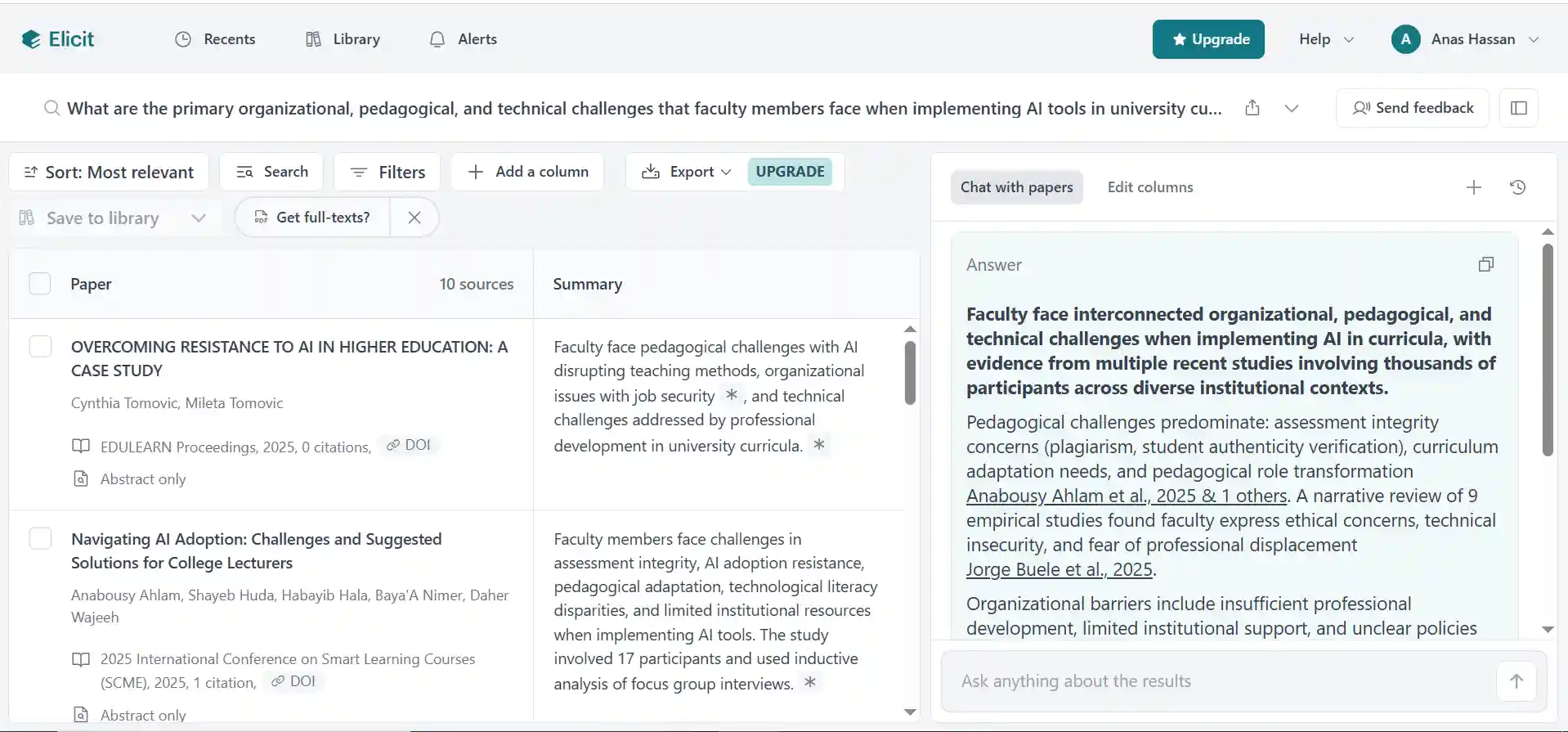
My Personal Take: Why Elicit is a Game-Changer
I’ve cycled through dozens of research tools, but Elicit is the one I actually keep open when I’m buried in papers. It doesn’t just “find” info; it systematically deconstructs it.
Automated Extraction: As you can see in my screenshot, I used it to analyze ‘AI challenges in university curricula.’ Instead of manually scanning 10 papers, Elicit pulled the ‘Main Findings’ into a clean table for me.
Verifiable Accuracy: I value how it links every claim to a specific researcher. That level of transparency is exactly what gives a project—or an article—true authority.
The ‘Chat’ Synthesis: The panel on the right shows me ‘chatting’ with the collective findings of all 10 sources at once. It’s high-level synthesis that saves me hours of cross-referencing.
The Final Verdict: How to Choose the Top AI Tools for Academic Research
Choosing the right platform is critical for academic success. I personally recommend selecting your tool based on your current research stage to maximize efficiency and maintain academic integrity.
If you are a PhD candidate or writing a formal thesis, Elicit is your most valuable asset due to its ability to build complex evidence tables. However, if you are just starting an assignment and need quick, verified answers, Perplexity AI is the superior choice for initial discovery.
My Expert Strategy for Students:
Use Perplexity AI to understand the topic and gather initial scholarly sources.
Visit Semantic Scholar to check the Citation Influence of those sources.
Upload your final papers to Elicit to generate your Literature Review table and extract data.
This 3-step workflow ensures you are part of the top 1% of students who use AI for deep research rather than just shortcuts.
FAQs
1. ChatGPT vs. Perplexity: Which is safer for citations? Perplexity wins for research because it provides real-time footnotes linked to live sources. Unlike ChatGPT, which can hallucinate sources, Perplexity shows you the “receipts” for every claim, making your bibliography 100% verifiable.
2. How do I scan 10+ papers in minutes? Use Elicit’s “Chat with papers” feature. It extracts data (like sample size or main findings) from multiple PDFs into a single table view. You get the “summary of summaries” without opening every file manually.
3. Is there an AI to check if scientists agree on a topic? Yes, Consensus AI. It uses a “Consensus Meter” to show what percentage of the scientific community agrees or disagrees with a research question. It’s the fastest way to find a scientifically backed “Yes” or “No.”
4. How can I find only ‘High-Impact’ research papers? Semantic Scholar is the best tool for this. It uses a “Highly Influential” filter to highlight papers that have actually shaped the field, ensuring you only cite top-tier, respected research.